

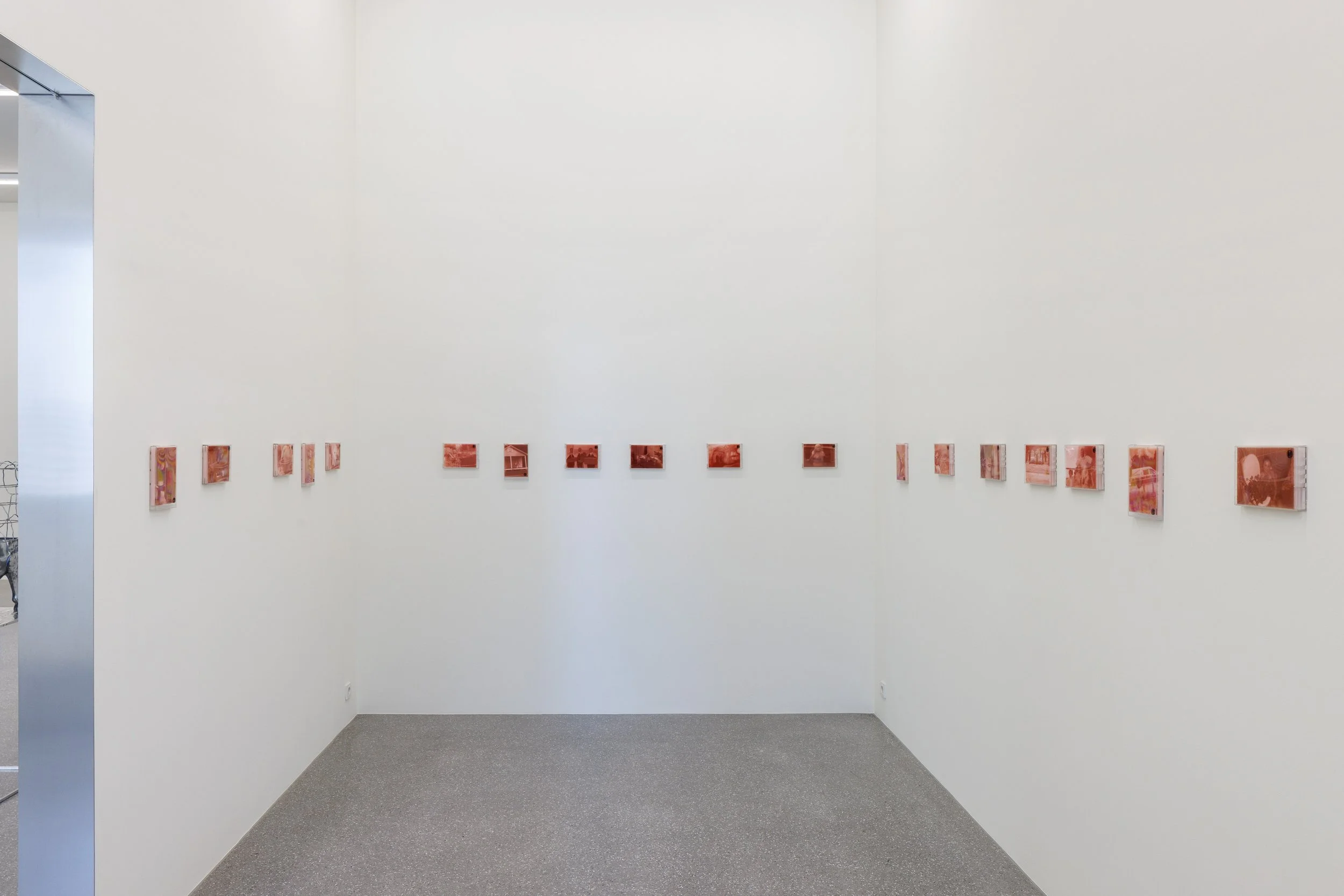
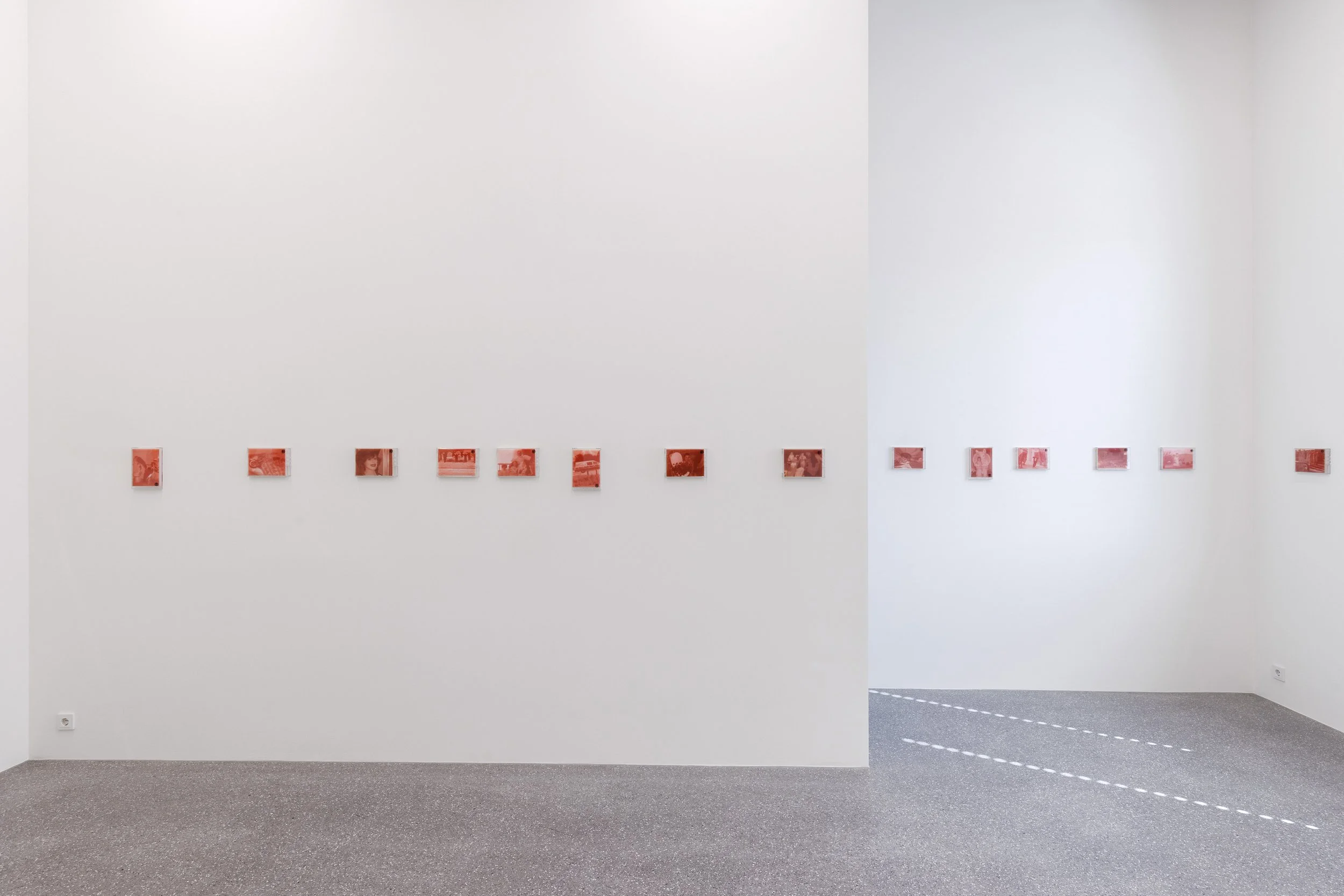
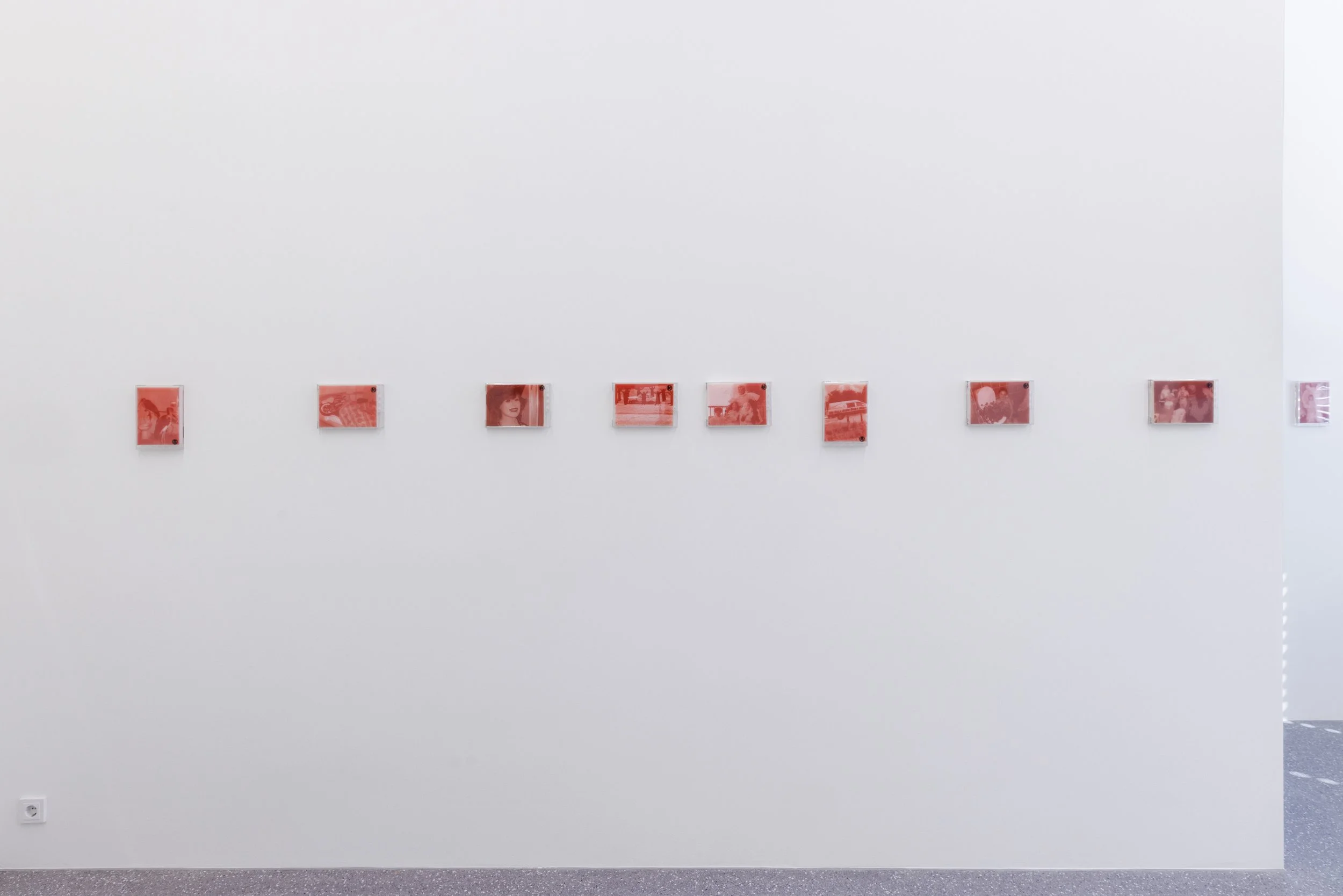
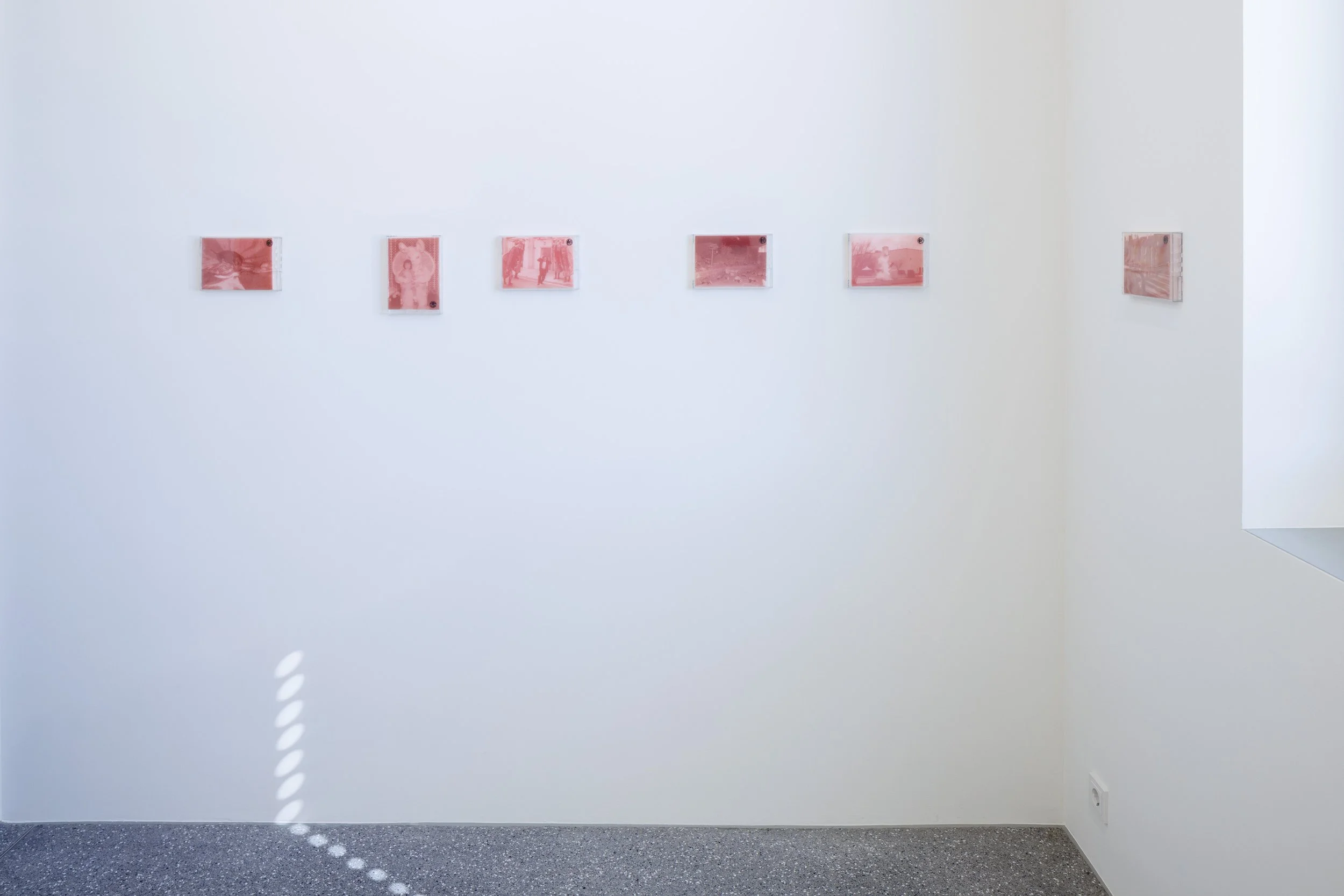
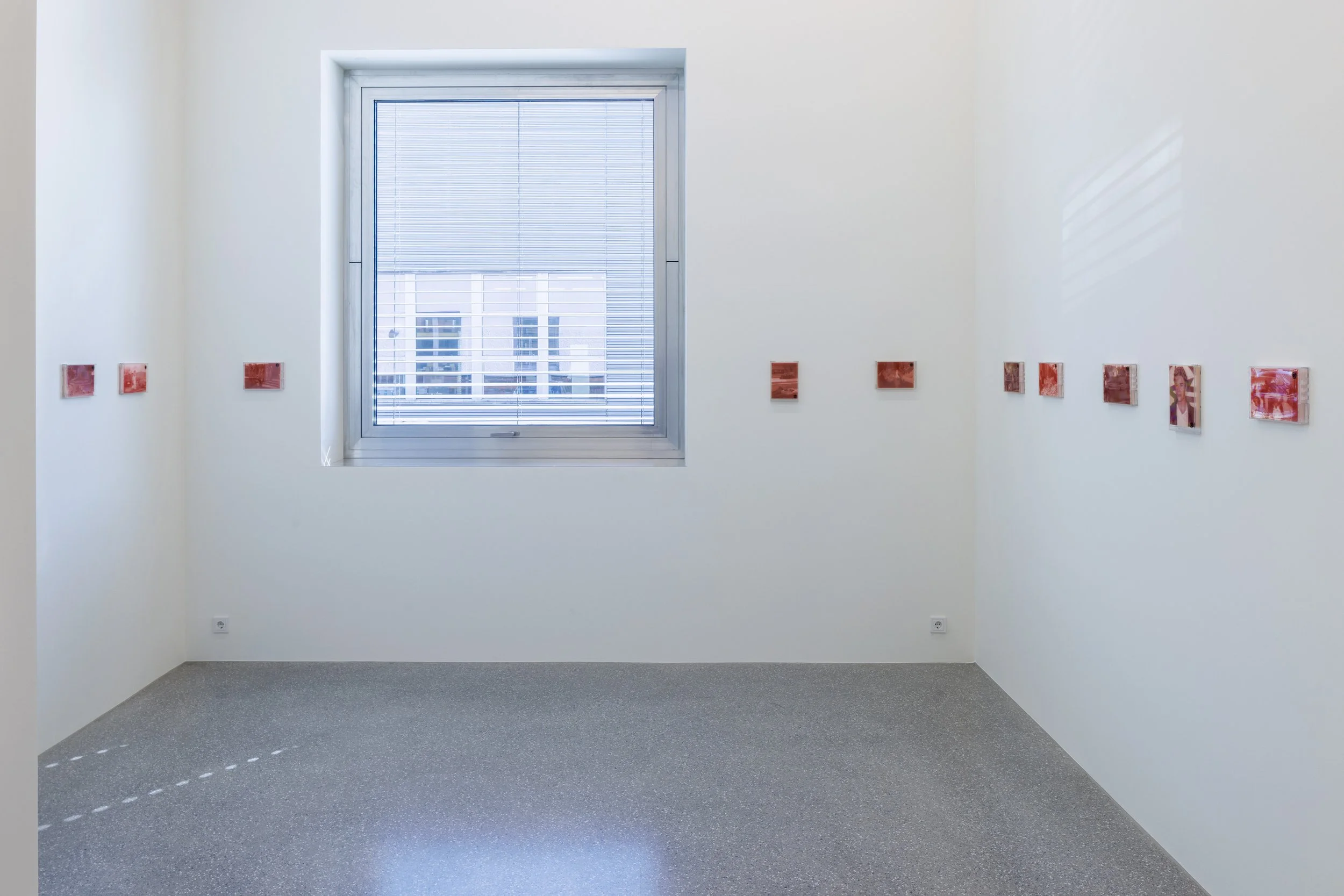
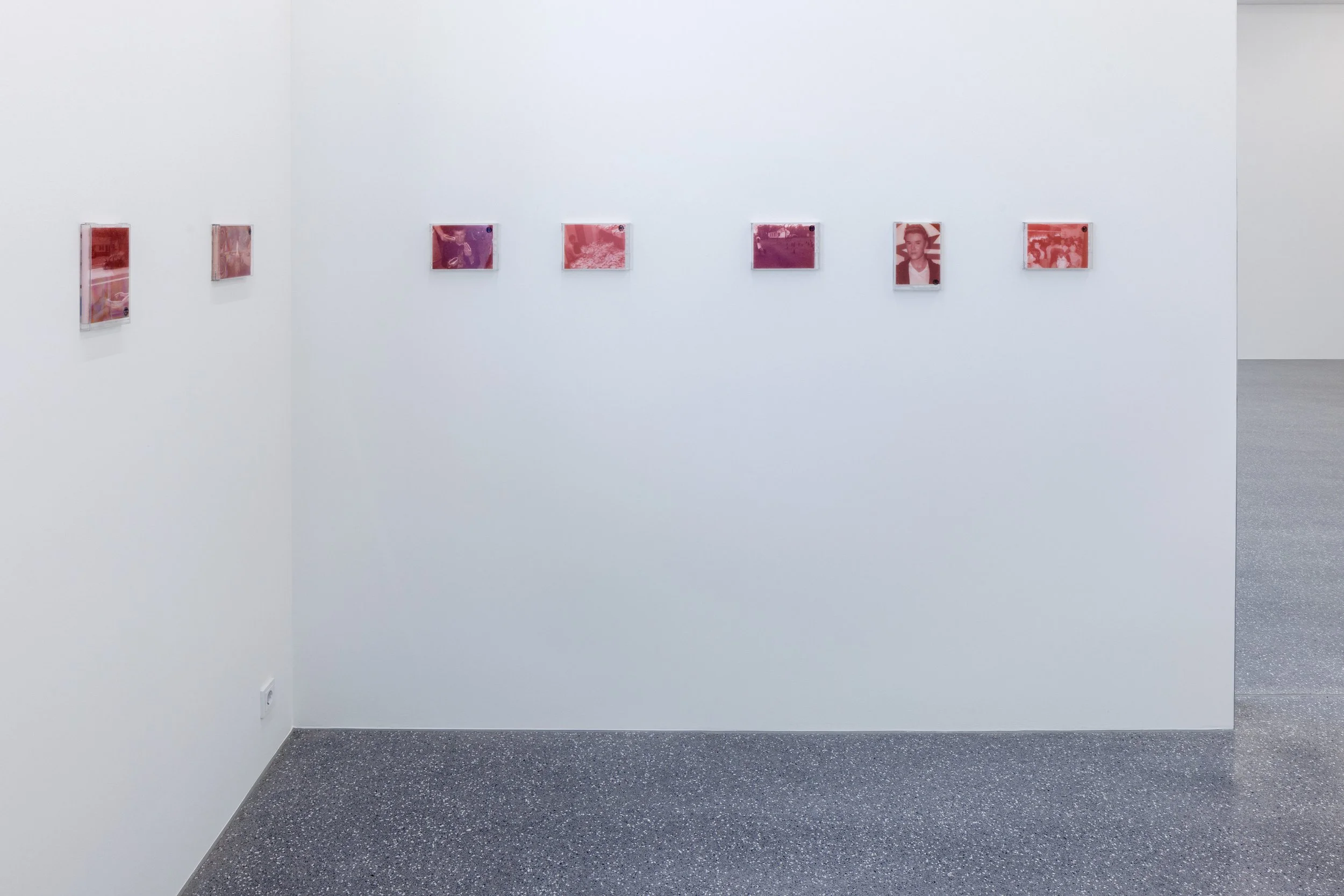
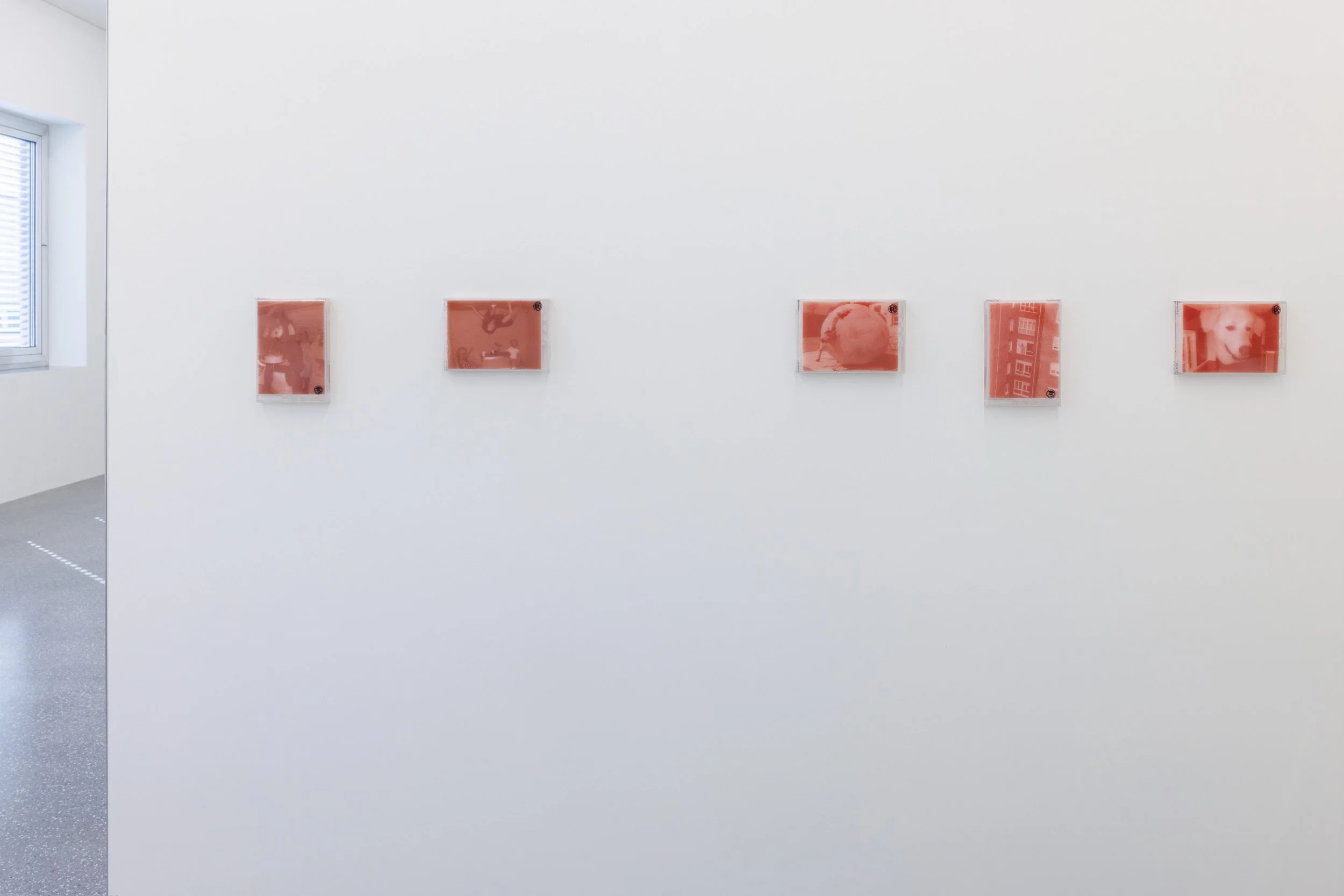
Since the halcyon days of Tumblr, ca. 2015, the term “cursed image” has described an uncanny genre of low-resolution found photography, defined less by its content than its detachment from any legible context. Cursed might be synonymous with Lynchian, in which the visually mundane collides with some surreal event that defies explanation, rendering it sinister in its inexplicability. As a relic of some unknown time and place, the cursed image can only be found—in attics and basements, or more likely on Reddit threads; it cannot intentionally be created.
The color pink summons childhood memories from inside the artist’s mouth, in which the liminal state between waking and sleeping would cause the rolling back and chewing of her tongue. This is the dissociative process of the brain as it gradually relinquishes control, a fall from consciousness that drags a slipstream of flashing visions behind it. A dream is the imagination detached from will; a cursed alter ego that appropriates and distorts the recollections of waking life. The Suzuki motocross sleeps well at night, tucked beneath the wallpaper pattern of a duvet, as men in suits and plastic capes hold enormous loaves of bread. The suburban dog, once again foiled by her own curiosity, finds herself trapped inside the dollhouse. How will she make it out this time?
In a previous life, the photograph was an extraordinary technology, able to crystallize a discrete moment in time as a discrete object in space. The photograph then versus now is what a cigarette is to a vape; the finite object dissolved into a continuous digital stream, a vapor with neither past nor future, beginning nor end. Hito Steyerl lamented the fate of infinite circulation in her 2009 essay, In Defense of the Poor Image: “Poor images are the contemporary Wretched of the Screen, the debris of audiovisual production, the trash that washes up on the digital economies’ shores.”
Today, the instantaneous, automated over-proliferation of imagery provides steady diet to the artificially intelligent machine, a mind of constant hunger which has never lived a life nor feared the agony of death. In recent years, one swallowed the entirety of the Museum of Modern Art’s permanent collection, which it regurgitated as a pulsing, slushy, colorful slop.
“Is our collective humanity just somebody else's screensaver?”
— Artist Billie Clarken
But imagine reverse-engineering a smoothie so that its constituent parts could be eaten whole—that is, retrieving the specificities of lived experience from the fuzzy annals of memory, dusting them off and displaying them anew. The clear acrylic DVD case offers an ideal organizing principle, being another indexical relic of the past. It held the moving image in a fixed point in space in an easily catalogued, stackable, discrete container. In mining the immense trove of what already exists on earth, we may find no need to ever make a new image again.
Exhibition text by Janelle Zara